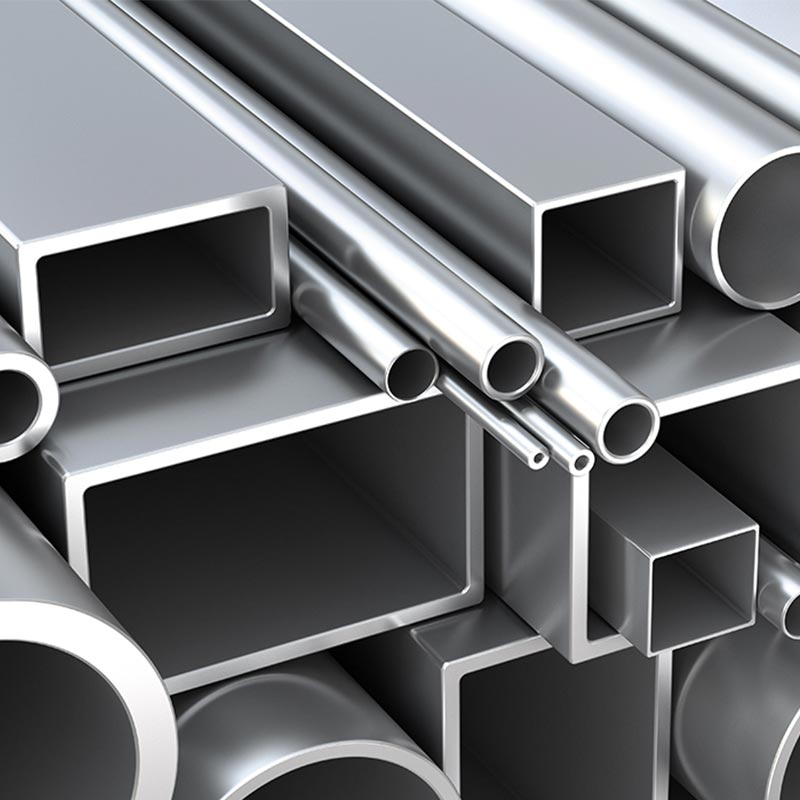
Choosing the right steel tube material is one of the most important decisions when developing a precision mechanical product.
A steel tube may look like a simple structural component, but its material properties can directly affect strength, dimensional stability, machinability, surface quality, weight, and service life.
For OEM manufacturers, the question is therefore not simply:
“Which steel tube is strongest?”
A better question is:
“Which steel tube material provides the right combination of performance, precision, processing capability, and cost for my application?”
This is particularly important when selecting a precision steel tube for automotive components, electric lifting columns, industrial equipment, hydraulic systems, or smart office products.
Search Intent: What Should Buyers Consider When Selecting Steel Tube Material?
When international buyers search for a precision steel tube supplier, they often need help making a material decision before placing an order.
Different applications place different demands on steel tubes.
A component used for repeated mechanical movement may require excellent dimensional consistency and surface quality. A structural component may prioritize strength and load-bearing performance. A tube that will undergo additional machining may require suitable machinability.
Therefore, material selection should begin with the final application, rather than starting with a standard steel grade.
The key is to identify which properties are critical and which specifications are secondary.
Problem: The Strongest Material Is Not Always the Best ChoiceA common mistake in steel tube selection is to focus only on tensile strength.
Strength is important, but it is only one part of overall performance.
For precision applications, buyers may also need to consider:
dimensional accuracy, wall thickness consistency, surface condition, hardness, formability, weldability, machinability, corrosion resistance, weight, and production cost.
For example, a material with very high strength may not necessarily be the easiest option for a specific forming or machining process.
Similarly, a low-cost material may create additional expenses if it requires extensive secondary processing to achieve the required dimensions or surface condition.
This is why material selection needs to consider the complete manufacturing process.
Solution: Match Material Properties to the Final ApplicationThe most practical approach is to define the application's technical requirements first.
For a precision steel tube, buyers should consider the operating environment, expected load, movement frequency, required dimensions, tolerance range, surface requirements, and downstream processing.
If the tube will be used in a telescopic mechanism, dimensional consistency becomes particularly important because multiple sections need to interact smoothly.
If it will be used in an automotive or industrial component, strength and repeatability may become higher priorities.
If additional machining is required, the material should also be compatible with the intended manufacturing process.
This application-first approach helps avoid over-specification and under-specification.
Instead of selecting the most expensive material available, manufacturers can select a material that provides the right performance for the actual product.
Material selection is only part of precision steel tube performance.
The manufacturing process also plays an important role.
Cold drawing is widely used to improve the dimensional accuracy and surface characteristics of steel tubes. By controlling the tube through a drawing process, manufacturers can achieve tighter dimensional control than conventional hot-finished tubing in applications where precision is required.
For OEM customers, this can simplify downstream assembly and machining.
It can also improve consistency between batches when the manufacturing process is properly controlled.
Therefore, when evaluating a cold drawn precision steel tube, buyers should consider both the material grade and the manufacturer's ability to control the drawing process.
Brand Proof: How Huagang Intelligent Approaches Material Selection
Huagang Intelligent combines precision steel tube manufacturing with intelligent lifting product development.
One of its key manufacturing characteristics is the use of automotive-grade precision cold-drawn steel tubes for electric lifting columns.
This application places particular emphasis on dimensional consistency because telescopic lifting columns rely on coordinated movement between multiple sections.
Huagang Intelligent therefore focuses not only on the steel material itself, but also on the relationship between:
material → cold drawing process → dimensional accuracy → surface quality → component performance.
The company manufactures precision steel tubes for applications including automotive components, intelligent office products, electric lifting systems, and industrial applications.
Its product capabilities include precision control, customized dimensions, different processing requirements, and OEM development.
For international buyers, this means material selection can be discussed together with the actual product application rather than treated as an isolated purchasing decision.
Why OEM Buyers Need Customized Material Solutions
Not every project can use the same steel tube specification.
An OEM product may require a specific combination of:
steel grade, outer diameter, wall thickness, tolerance, length, surface condition, mechanical properties, and secondary processing.
A capable manufacturer should therefore be able to evaluate the complete requirement and recommend an appropriate solution.
This is particularly useful during new product development.
Instead of choosing a standard tube first and discovering compatibility problems later, buyers can communicate the final application and technical requirements at the beginning of the project.
Huagang Intelligent supports OEM and ODM customization, helping customers develop precision steel tube solutions around their specific product requirements.
Cost Should Be Considered Alongside Performance
Material price is important, but it should not be the only factor used to evaluate a steel tube.
A lower-priced tube may require additional machining, more quality adjustments, or greater processing effort.
Conversely, selecting an unnecessarily high-grade material may increase product cost without creating meaningful performance benefits.
The better approach is to evaluate:
material cost + processing cost + quality consistency + downstream efficiency + expected service life.
This gives OEM buyers a more complete understanding of the actual cost of a steel tube solution.
For international manufacturers, this approach can support more competitive product development while maintaining the required performance.
How to Choose the Right Precision Steel Tube Supplier
Selecting the correct material is only the first step.
The supplier must also be capable of manufacturing that material consistently.
Before starting mass production, OEM buyers should evaluate whether the supplier has:
stable raw material sourcing, controlled cold drawing processes, precision inspection capabilities, customization experience, quality management systems, and sufficient production capacity.
Most importantly, the supplier should understand the application.
A manufacturer that understands how its precision steel tube will be used can provide more useful technical recommendations than a supplier that only sells standard tube dimensions.
This application-oriented approach can help reduce communication gaps between material procurement and final product development.
The Right Material Starts with the Right Manufacturing Partner
There is no single “best” steel tube material for every application.
The right choice depends on the balance between:
strength, precision, surface quality, processing requirements, operating conditions, product design, and total cost.
For demanding applications, cold drawn precision steel tubes can provide an effective solution when dimensional accuracy and consistency are critical.
Huagang Intelligent combines automotive-grade precision cold-drawn steel tube manufacturing with electric lifting column and intelligent office product development.
This allows the company to evaluate steel tube requirements from both the material perspective and the final application perspective.
For OEM customers, that means a more connected path from material selection to finished product.
Looking for the Right Precision Steel Tube Material?
If you are developing automotive components, electric lifting columns, smart office products, industrial equipment, or other precision applications, choosing the right steel tube material can significantly influence the final product.
Provide Huagang Intelligent with your technical drawings, material requirements, dimensions, tolerances, operating conditions, and application details.
The team can evaluate your requirements and develop a customized precision steel tube solution based on your product needs.
The right steel tube is not simply the strongest one—it is the one that fits your application, manufacturing process, and performance requirements.